Why Some Brookhaven Homes Sell in a Week and Others Sit for Months, and What That Split Actually Means for You
September 17, 2026
September 17, 2026
Pull two market reports on Brookhaven from the same season and you will find two different cities. One says homes are moving in a median of six to seven days, with sellers collecting close to full asking price. Another, covering roughly the same window, puts the average days on market closer to 75. Neither number is wrong. They are measuring different populations of homes that happen to share a mailing address, and figuring out which population your target property belongs to is the actual work of buying or selling here right now.
In April 2026, single-family homes in Brookhaven were trading in a median of just seven days, with sellers receiving 99.8 percent of list price. A month earlier, single-family homes were closing in a median of six days at 101.5 percent of list, a sign that buyers were routinely paying above asking to win deals. Those are fast-lane numbers, and they line up with a single-family median sold price that climbed to $980,000 in April 2026, up more than 12 percent year over year, with a year-to-date median of $990,000.
Compare that to a separate February 2026 read on the market that put Brookhaven's median sale price at $797,000, up a modest 2 percent year over year, with homes averaging around 75 days on market. That figure blends every property type, every price point, every neighborhood district into a single citywide average, which is a very different exercise than isolating single-family sales in a given month.
Neither report is cherry-picking. They are answering different questions. One is asking what is closing right now, weighted toward whatever is actually moving. The other is asking what the full stock, including homes that have sat unsold for a while, looks like when you average it out. In a city built on a strange mix of 1950s ranches, half-million-dollar teardown lots, and $5 million estates, those two questions produce two very different numbers from the same three months.
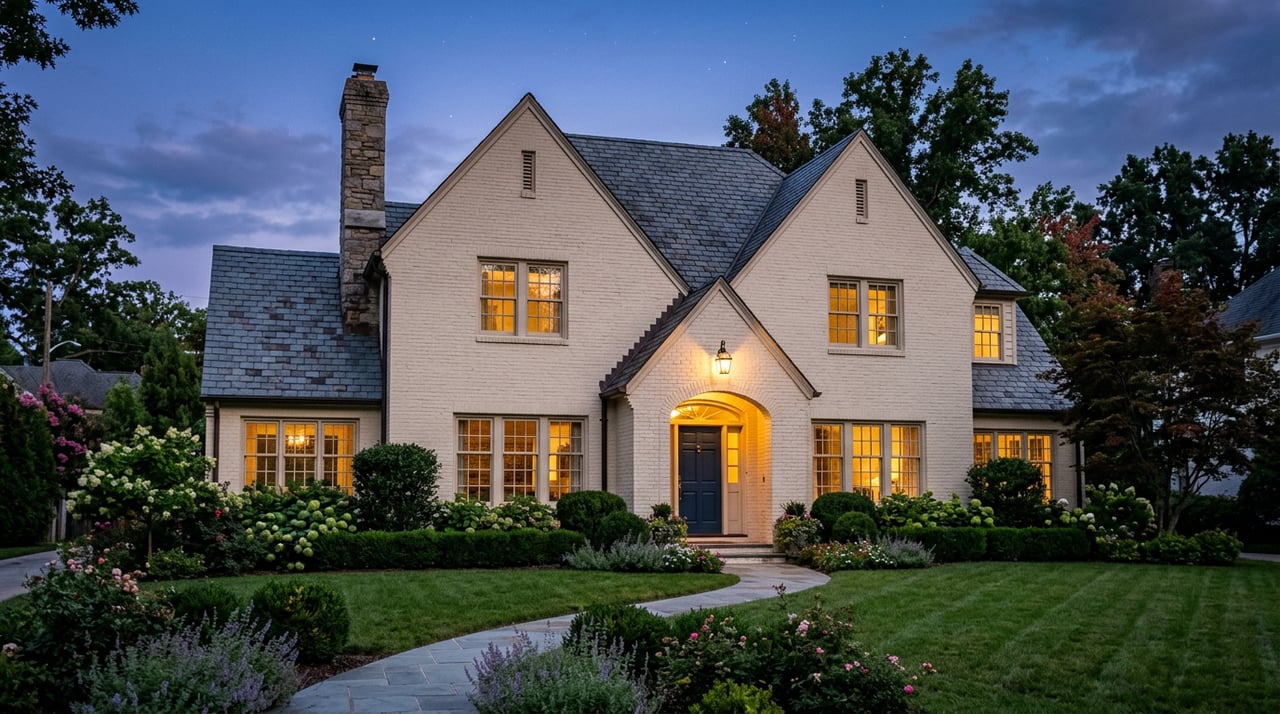
The speed you are reading about in the single-family reports is not evenly distributed across Brookhaven. It is concentrated in the Ashford Park and Brookhaven Fields character area, where teardown-and-rebuild has been the dominant transaction pattern for years. On Winding Lane, an all-original bungalow sold for $850,000 while a newer-construction home on the same street closed at $2.3 million. Other recent sales nearby ranged from $710,000 for renovated product up to $2.22 million and $2.61 million for high-end new builds. That is not a typo or a data error. It is the same street pricing two entirely different products.
The mechanism behind that spread is land value. Lot value alone in Ashford Park or Brookhaven Fields runs roughly $400,000 to $750,000 before a single stud goes up, and new construction on those lots tends to command a 25 to 35 percent premium over comparable existing homes once finished. Builders and buyers both know this, which is why original-condition homes in this pocket move quickly even in their current state. They are not really competing against other bungalows. They are competing against what a builder could put on the same footprint, and that math pulls sale timelines down for everyone.
A fourth lane has opened up here too, and it barely existed in Brookhaven a few years ago. Empire MacKintosh, known locally as The Mack, is a 53-unit townhome project on Apple Valley Road, walkable to Brookhaven Village and the MARTA station, sitting across the street from the renovated industrial space that now houses Arnette's Chop Shop. Units started in the mid-$600,000s when construction launched, giving buyers a new-construction option that does not require winning a bidding war on a teardown lot. It is not the same product as a single-family rebuild. There is no yard and no stream buffer to negotiate around. But it represents a distinct segment, and that matters if you are trying to read the single-family numbers as a complete picture of demand.
At the other end of the city, Historic Brookhaven tells a different story. This is the estate corridor near Capital City Country Club, defined by older architecture on larger lots, much of it listed on the National Register of Historic Places. A Zillow neighborhood-level index for this area crossed $1.8 million as of January 2026, a price tier that simply does not move at the six-day pace of an Ashford Park rebuild. Buyers at this level are shopping for a specific lot, a specific architectural pedigree, sometimes a specific school of buyer patience. Homes here can sit for months waiting for the right match, and that is normal for the segment, not a sign of weakness in the broader market.
This is the piece that gets lost when a single median or a single days-on-market figure gets quoted without context. A 75-day average sounds sluggish next to a 7-day figure, but it may simply reflect that a handful of $1.8 million-plus estate homes are sitting in the mix alongside dozens of teardown flips that closed in under two weeks. Average the two together and you get a number that describes neither market accurately.
Before assuming any given Brookhaven property belongs to the fast-moving rebuild lane, it is worth understanding what the city's zoning actually allows on that specific parcel. Brookhaven's single-family zoning runs on a tiered system, with each tier carrying different minimum lot size and width requirements. Frontage in particular can directly shape what can be built, which means two lots that look similar on paper can support very different rebuild plans depending on which tier they fall under.
There is a second constraint that catches buyers off guard: Brookhaven's stream-buffer requirements can meaningfully reduce the usable building envelope. On a smaller Ashford Park or Brookhaven Fields lot, that buffer can be the difference between a straightforward rebuild and a design that requires real creativity to hit target square footage. This is the kind of detail that never shows up in a median price or a days-on-market figure, but it is exactly the detail that determines whether the lot math described above actually applies to the house you are looking at.
The headline number was never lying. It was just describing a different transaction than the one you're trying to make.
If you are shopping in Brookhaven right now, the practical move is to stop asking what the median is and start asking which lane the specific listing sits in. A renovated bungalow in Ashford Park is competing against rebuild economics, not against the citywide average. A listing in Historic Brookhaven is competing against a smaller pool of buyers willing to wait for the right estate property. A unit at The Mack is competing against other new-construction attached product, not against single-family comps down the street.
For sellers, the same logic applies in reverse. Pricing a home in Ashford Park or Brookhaven Fields against a blended citywide median risks leaving money on the table if the lot itself has real rebuild value. Pricing a Historic Brookhaven estate against the fast-moving single-family numbers risks an unrealistic timeline expectation. Knowing which segment your home actually belongs to, before you set a number, is most of the work.
Is Brookhaven a buyer's market or a seller's market right now? It depends on the segment. Single-family homes, particularly in the teardown-active pockets, have been trading in favor of sellers, with list-to-sold ratios near or above 100 percent in early 2026. The estate corridor and parts of the condo market have more room for negotiation.
Why did condo prices move so differently from single-family prices in early 2026? Condo medians have swung sharply month to month, driven less by broad appreciation and more by which price tier of condo happened to close in a given period. A run of higher-priced units near Town Brookhaven and along Peachtree Road closing together can move the median significantly without reflecting a citywide shift.
Does a lower price per square foot on an original home mean it's a better deal? Not necessarily. In a lot where the land itself carries most of the value, the finished square footage on an original home matters less than what the parcel could support under Brookhaven's zoning and buffer rules. That is a calculation worth running before comparing two listings on price alone.
If you are trying to figure out which version of Brookhaven your search or your listing actually belongs to, that is exactly the kind of read Neumann & Co works through with clients before a number ever goes on a sign. Get Your Home Valuation and we will walk you through what your specific lot, block, or estate corridor is really doing right now.
This article is general information, not legal, tax or financial advice. Consult a qualified professional about your situation.
Stay up to date on the latest real estate trends.


Join Neumann & Co's thriving real estate team, where corporate America savvy meets personalized service! With a focus on win-win deals and tech-driven marketing, we ensure results tailored to your goals. Benefit from our expertise in Atlanta's communities and the perspective of a mother of five. Inquire now for unparalleled support and expertise!
Neumann & Co
Ansley Real Estate
Christie's International Real Estate
Address
3035 PEACHTREE RD NE
ATLANTA GA 30305