Brookhaven Tree Rules and the Costs of a Wooded Lot
October 1, 2026
October 1, 2026
A Brookhaven teardown budget usually has two numbers on it before anyone breaks ground: what the lot cost, and what the new house will cost to build. There's a third number that catches almost everyone off guard, and it doesn't come from a contractor. It comes from the trees.
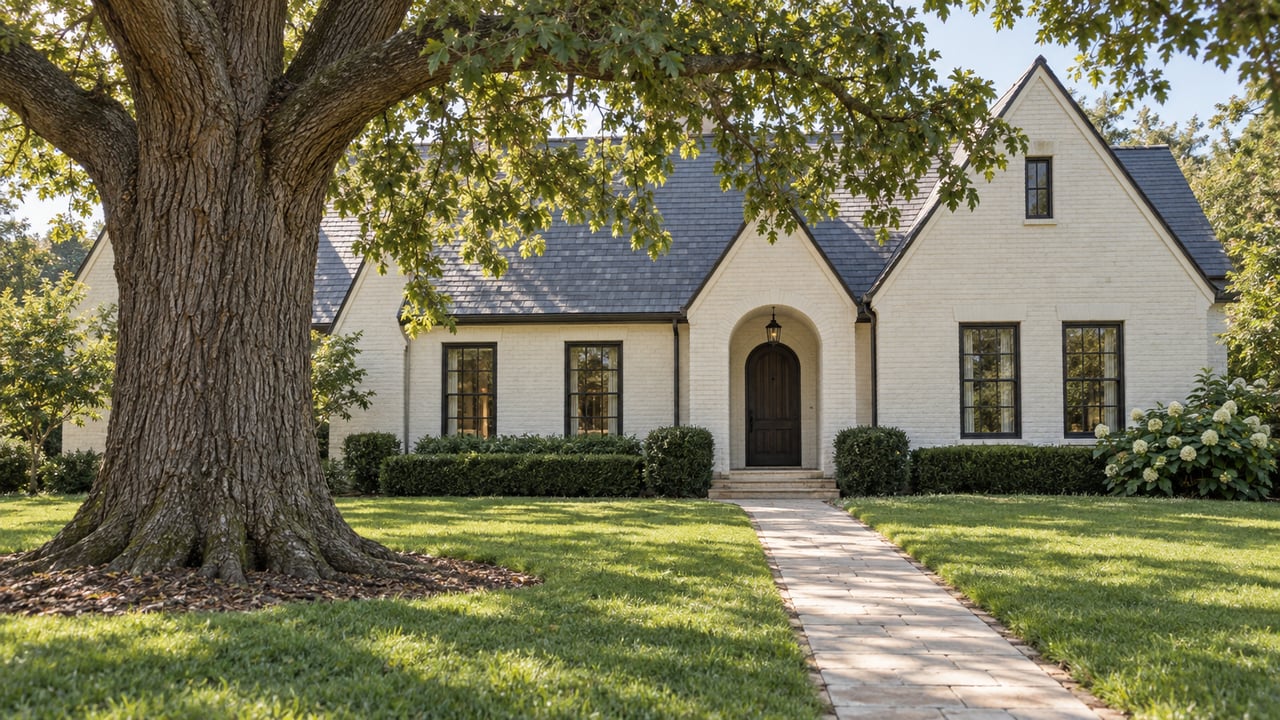
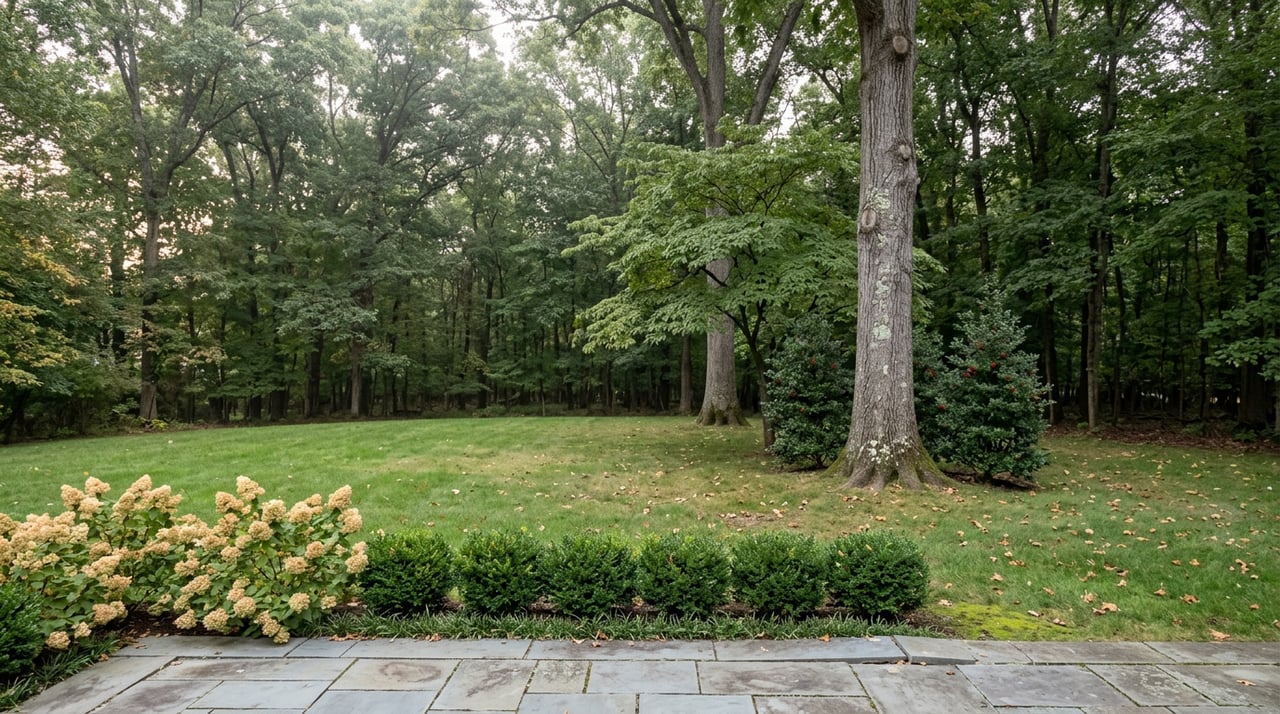
Walk the older sections of Brookhaven, the streets off Peachtree Road, the lots around Ashford Park, and you'll see the pattern the city's tree code was written for: big hardwoods and mature pines on deep, heavily wooded parcels, the same canopy that made the lot desirable in the first place. That canopy is also what the City of Brookhaven's tree preservation ordinance measures, permits, and in some cases charges for. If you're buying a wooded lot to redevelop, or selling one and wondering why a buyer's offer looks lower than the comps suggest, this is usually where the gap lives.
Brookhaven's code (Chapter 14, Article III of the city's ordinances) defines a tree as any woody plant with a trunk at least three inches in diameter at breast height, and removal permits kick in once a trunk clears roughly four inches DBH. In practice, that covers nearly every tree on a mature lot old enough to have a canopy worth talking about. A builder can't legally drop a tape measure's worth of trunk without a permit application through the city's project portal, and non-emergency removals without one can draw a fine on top of whatever recompense would have applied anyway.
The ordinance also carves out a special category: the specimen tree. These are trees that qualify for extra protection based on species-specific size thresholds written directly into the code. A tulip poplar, for example, hits specimen status at 26 inches in diameter. Given how common tulip poplars, oaks, and hickories are on Brookhaven's older lots, it doesn't take an unusual tree to trigger this tier. It takes an average one.
Removing a specimen tree carries a recompense obligation of 1.5 times its DBH in caliper inches, payable either as replacement trees planted on site or as a contribution to the city's Tree Fund. Take that 26-inch tulip poplar at the low end of specimen status. Removing it obligates the builder to replace 39 caliper inches somewhere, either as new trees (the ordinance sets a 2-inch minimum caliper per replacement tree, so that's a lot of new plantings) or as payment into the fund at whatever rate the city's current fee schedule sets. On a lot with three or four specimen-sized trees standing where the new footprint needs to go, that math adds up before a single yard of concrete gets poured.
This is a different mechanism from what buyers might expect if they've read anything about tree fees in the City of Atlanta, which sits right next door and shares a metro area with Brookhaven but runs its own separate ordinance. The City of Atlanta raised its recompense fee to $140 per diameter inch starting January 1, 2026, a 4.5 times increase from the prior flat rate. That's a real number for an Atlanta lot. It is not Brookhaven's number. Brookhaven's ordinance is built around a caliper-inch multiplier and a replant-or-pay structure, not a flat per-inch dollar figure, so anyone pricing a Brookhaven teardown off something they read about Atlanta's rule is pricing the wrong ordinance.
For a genuinely wooded lot, the bigger constraint often isn't the fee at all. It's the density floor. Northside Tree Professionals reports that Brookhaven's code sets a minimum tree density requirement, generally cited around 130 DBH inches per acre, along with a canopy cover minimum near 45 percent. A heavily wooded acre in an established Brookhaven neighborhood can already be sitting close to that floor before a single tree comes down. That means a builder can be fully willing to pay recompense and still not have a legal path to clear as much of the lot as the plan calls for, because removing more trees would push the site below the density the ordinance requires it to hold.
This is the part a spreadsheet won't catch on its own. A demolition and grading estimate tells you what it costs to clear a site. It doesn't tell you whether the site can be cleared to that degree at all.
Brookhaven's tree ordinance isn't static, and the most recent change came directly out of a real dispute. As Citizen Portal reported, city staff described a case at a planning work session out of East Club Drive where a developer had been denied a tree-variance request, appealed to Superior Court, and was told the court would allow the tree's removal. In the same window, Brookhaven's City Council approved a text amendment to the tree ordinance that removed an "economic-value test" from how variance requests get judged and added a new administrative variance for genuine site constraints.
That's a meaningful procedural shift. Under the prior standard, a builder arguing for a variance had to make an economic-hardship-style case. The amendment moves toward a more direct administrative path when the constraint is about the physical site itself, not the project's profitability. It doesn't touch the recompense formula or the density floor, but it does change how disputes over borderline cases get resolved going forward, and it exists because one property owner took a denial to court and won.
If you're evaluating a Brookhaven teardown candidate, the arborist walk isn't a formality to schedule after closing. It's diligence that belongs before you waive contingencies, because it's the only way to know in advance which trees on the lot are specimen-classified, what recompense obligation the plan you have in mind would actually trigger, and whether the site's existing canopy is already close to the density floor. A lot that looks like a clean teardown from the street can turn out to have three specimen tulip poplars standing exactly where the garage needs to go.
If you're selling a heavily wooded lot, the same logic runs in reverse. A canopy assessment done before you list gives you language to describe what a buyer is actually getting, and it can explain why an offer on a densely wooded parcel lands lower than a comparable but more open lot two streets over. The tree ordinance isn't a reason to discount a wooded property. It's a reason to price it with the real numbers in hand instead of the assumed ones.
Does every tree removal in Brookhaven require a permit? Any tree above roughly four inches DBH needs a permit before non-emergency removal, and the city processes applications through its Community Development project portal.
What counts as a specimen tree? It depends on species. The ordinance sets individual diameter thresholds, and a tulip poplar reaches specimen status at 26 inches DBH, a size that isn't unusual on Brookhaven's older lots.
Is Brookhaven's tree fee the same as Atlanta's $140-per-inch rate? No. That figure applies to the separate City of Atlanta ordinance, effective January 1, 2026. Brookhaven calculates recompense as 1.5 times a specimen tree's DBH in caliper inches, payable as replanting or a Tree Fund contribution at the city's current rate.
Can I just pay the recompense fee and clear whatever I want? Not necessarily. Brookhaven's minimum tree density and canopy cover requirements are a separate constraint from the fee, and a lot already near that floor may not be clearable to the degree a project plan assumes, regardless of willingness to pay.
If you're weighing a wooded lot in Brookhaven, whether you're the one buying it to rebuild or the one selling it as is, the trees on it are already part of the deal math. Neumann & Co can walk the lot with you before you write the offer or set the price, so the canopy shows up in your numbers instead of your surprises.
This article is general information, not legal, tax or financial advice. Consult a qualified professional about your situation.
Stay up to date on the latest real estate trends.


Join Neumann & Co's thriving real estate team, where corporate America savvy meets personalized service! With a focus on win-win deals and tech-driven marketing, we ensure results tailored to your goals. Benefit from our expertise in Atlanta's communities and the perspective of a mother of five. Inquire now for unparalleled support and expertise!
Neumann & Co
Ansley Real Estate
Christie's International Real Estate
Address
3035 PEACHTREE RD NE
ATLANTA GA 30305