Sandy Springs Tree Ordinance Renovation Rules to Know
August 20, 2026
August 20, 2026
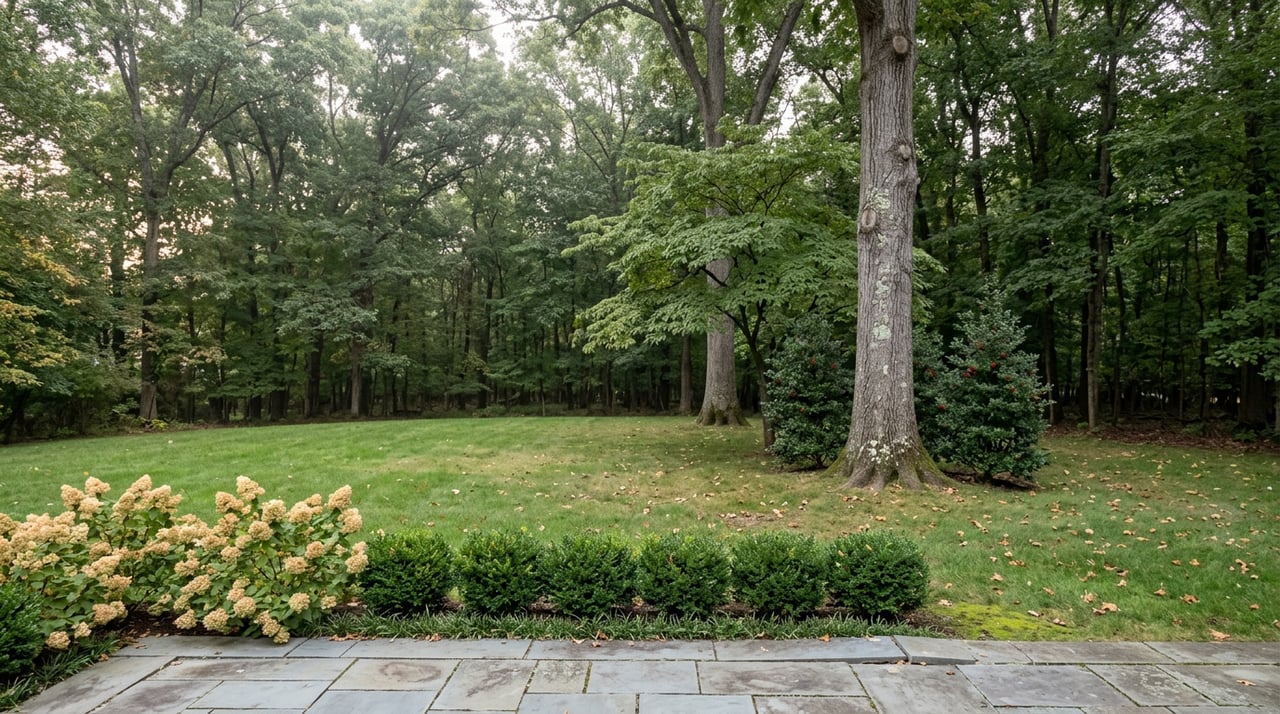
You find the house. Deep lot in Riverside or a shaded half-acre off Mount Vernon Highway, a canopy of hardwoods leaning over the roofline, and you can already picture the pool going in where the side yard slopes toward the tree line. You write the offer picturing that yard. What you don't picture, because almost nobody does before closing, is that the trees making the lot beautiful are the same trees that will decide what you're legally allowed to build under them.
Sandy Springs runs one of the more detailed tree conservation codes in metro Atlanta, and for a buyer planning a pool, an addition, or a full renovation, it isn't a background detail. It's a design constraint that shows up before the contractor does. The mechanism is worth understanding now, because the difference between a lot that accommodates your plans and one that fights you for a year often comes down to a handful of trees you haven't measured yet.
The city's Tree Conservation Ordinance, part of Division 9.3 of the Development Code, sets permit thresholds by species and size. Any hardwood or pine tree measuring 18 inches or more in diameter at breast height needs a permit before it comes down. Dogwoods and redbuds, prized for their spring color, trip that same requirement at just 10 inches. Any tree sitting inside the Chattahoochee River Corridor or a stream buffer needs a permit regardless of size or species.
That much is straightforward. The part that catches renovation-minded buyers is what happens when tree removal is tied to construction. If you're clearing trees to grade a yard, install a pool, pour a patio, or build an addition, a simple removal permit isn't enough. The city requires a full Tree Conservation Plan, filed with your construction documents, before any removal or impact to the root zone occurs.
Here's the quick reference most buyers wish they'd seen before making an offer:
| Category | Threshold | What it triggers |
|---|---|---|
| Protected Tree | Hardwood or pine, 18"+ DBH | Removal permit required |
| Protected Tree | Dogwood or redbud, 10"+ DBH | Removal permit required |
| Landmark Tree | Gunnison Tree identifies hardwoods at 27"+ DBH and pines at 30"+ DBH as Landmark Trees. | Stricter replacement math (1.5 trees per removal) |
| Any species | Inside River Corridor or stream buffer | Permit required regardless of size |
| Construction-linked removal | Grading, pool, patio, addition | Full Tree Conservation Plan, filed before impact |
This is where the math gets real. Sandy Springs sets a minimum canopy coverage of 35 percent for residential lots, calculated from Protected Trees, with each one worth 1,000 square feet of canopy credit. If removing trees for your pool or addition drops the property below that minimum, or if the lot is already under it, you owe the city $1,200 per Protected Tree into the municipal Tree Fund. Take down a Landmark Tree instead of a standard Protected Tree and the replacement ratio jumps to 1.5 trees planted for every one lost.
Run that against a real scenario. A buyer clearing three mature hardwoods to open up a backyard for a pool and covered patio, on a lot already near the canopy floor, is looking at $3,600 into the Tree Fund. That's before excavation, before decking, before a single tile goes down. It's not a fee that shows up on a listing sheet, and it's rarely part of a renovation budget until an arborist walks the property and starts measuring trunks.
The lots that make this easiest to plan around tend to be ones where the desired footprint sits clear of large-canopy trees to begin with, which is one more reason a pre-offer walk with someone who knows the neighborhood's lot patterns is worth more than a photo tour.
For lots near the Chattahoochee, in Riverside, along the Powers Ferry corridor, or anywhere within about 2,000 feet of the riverbank, the tree ordinance is only half the picture. Sandy Springs also enforces the Metropolitan River Protection Act, a state-level overlay administered through the Atlanta Regional Commission. Properties in that corridor carry a 50-foot undisturbed buffer along the riverbank and, more consequential for renovation plans, a 150-foot impervious surface setback that restricts concrete, gravel, pavers, and buildings.
Those two rules stack. A river-adjacent lot with mature canopy isn't just subject to tree permitting, it's also subject to a setback that can push a planned pool deck or addition footprint out of bounds entirely, regardless of how the trees shake out. Buyers drawn to river-corridor lots for the privacy and the wooded backdrop, the same qualities that make neighborhoods like Riverside and the golf-course-adjacent streets around Huntcliff so desirable, need to confirm corridor status before assuming a backyard vision is buildable at all.
A lot that looks like the most private, most wooded option on the tour is often the one with the least flexible footprint once you factor in both the canopy rules and the river setback.
Here's the piece that changes how you should think about canopy as a feature, not just a cost. Local environmental advocates in Sandy Springs say that many redeveloped properties likely fall short of the 35 percent canopy target after construction wraps.
If a pool, an addition, or a significant renovation is part of your plan for a Sandy Springs house, the due diligence that matters most happens before the offer, not during due diligence period paperwork. Check the property against the city's Community Development interactive map to confirm river corridor or stream buffer status, because that single data point can eliminate an entire backyard concept regardless of tree count. And budget for the possibility of a Tree Fund payment the same way you'd budget for a survey or an inspection, as a real line item rather than a surprise.
None of this means canopy-heavy lots aren't worth buying. Neighborhoods like Riverside and the Powers Ferry corridor carry some of Sandy Springs' most established tree cover precisely because that vegetation has been protected, fought over, and permitted around for decades. It means the value of that canopy is a legal fact as much as an aesthetic one, and understanding the difference before you're under contract is what keeps a renovation timeline from stretching into a second season.
If you're weighing a Sandy Springs lot against your renovation plans, or trying to figure out which streets in Riverside, Huntcliff, or the Powers Ferry corridor actually leave room for what you want to build, Neumann & Co can walk the specifics with you before you write the offer, not after.
Do I need a permit to remove a dead or hazardous tree? Atlanta Arbor says no standard permit is required if a tree is dead, dying, or hazardous, but the city still requires notice to the City Arborist along with photos or documentation of the tree's condition before it comes down.
How do I find out if my lot sits in the River Corridor? Sandy Springs' Community Development Map lets you check a specific parcel against both the Chattahoochee River Corridor boundary and designated stream buffers, including a layer that shows buffer areas directly on the map.
Is DBH measured the same way for every tree? Yes. Diameter at breast height is measured at 4.5 feet above ground level, or from the highest ground point if the tree sits on a slope, which is the standard the city's own permit application uses.
This article is general information, not legal, tax or financial advice. Consult a qualified professional about your situation.
Stay up to date on the latest real estate trends.


Join Neumann & Co's thriving real estate team, where corporate America savvy meets personalized service! With a focus on win-win deals and tech-driven marketing, we ensure results tailored to your goals. Benefit from our expertise in Atlanta's communities and the perspective of a mother of five. Inquire now for unparalleled support and expertise!
Neumann & Co
Ansley Real Estate
Christie's International Real Estate
Address
3035 PEACHTREE RD NE
ATLANTA GA 30305