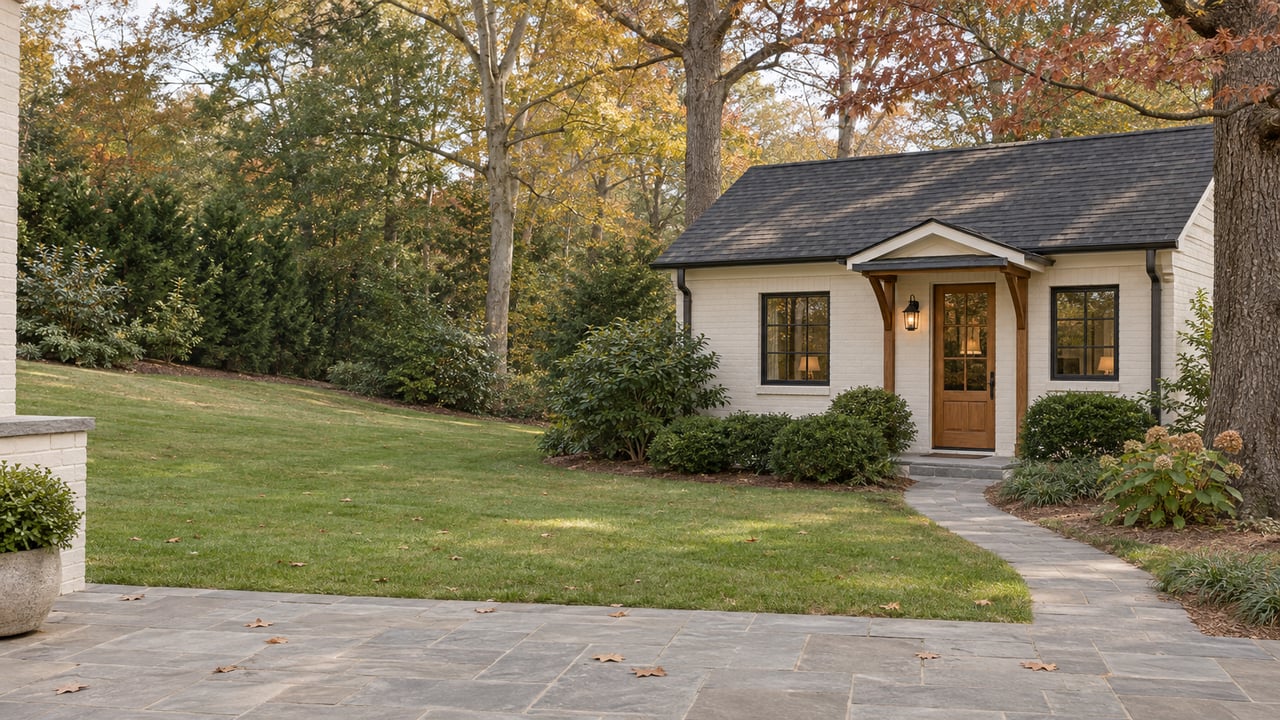
Cobb Now Allows Backyard Cottages. In East Cobb, Getting One Approved Is the Hard Part.
November 12, 2026
November 12, 2026
"They work in Marietta on a quarter-acre lot, but in East Cobb, maybe not so much." A City of Marietta resident said that at the October hearing where Cobb commissioners voted on accessory dwelling units. He told the board he supports ADUs but didn't think the county was ready for them, according to East Cobb News. The board adopted the ordinance anyway. On Oct. 27, 2026, it amended Chapter 134 of the county code on a 3-2 vote. Chair Lisa Cupid, Erick Allen and Monique Sheffield voted yes. Keli Gambrill and JoAnn Birrell, whose District 3 covers East Cobb, voted no, as reported by the Marietta Daily Journal.
A few weeks on, the vote changes less than it seems for anyone pricing an East Cobb home with a deep backyard. The ordinance makes a backyard cottage something an owner can apply for. Whether a given lot actually gets one depends on its deed restrictions, its neighbors and two public hearings. Lot size and the size of the house matter less.
The adopted code text lists ADUs as a special land use permit use, or SLUP, in the R-80, RR, R-40, R-30, R-20, R-15 and R-12 single-family districts. The ADU section says that a unit with its own entry, separate from the main house, requires a SLUP. The county's Oct. 8 explainer said an owner would need the Board of Commissioners to approve a SLUP before building any ADU. If you're thinking about an attached suite with a shared entrance, ask Cobb Zoning which path applies before you count on it.
For a detached cottage with its own door, the SLUP is a public process. The SLUP application linked from the county's zoning forms page lays out these steps:
The Planning Commission meets the first Tuesday of the month and the board's zoning hearing is the third Tuesday, with January as the exception for both. On the county's 2026 zoning calendar, the next filing cutoff is Dec. 3, 2026, which leads to tentative hearings on Feb. 2 and Feb. 16, 2027. The application guide encourages applicants to read opposition letters and try to resolve neighbors' concerns. Neighbors don't get a veto, but they do get a microphone twice. If the property is on septic, or will be, the applicant needs Health Department approval before filing. The form posted today is the 2025 version, so check the fees with Zoning when you apply.
The neighbors who show up are likely to have organized help. Richard Grome of the East Cobb Civic Association told commissioners the group's "fundamental concerns remain unchanged." He said ADUs would add demand on water, sewer, stormwater and traffic capacity "that were never intended when these neighborhoods were developed," as East Cobb News reported. Organized opposition has already stopped this idea once. Commissioners unanimously withdrew the earlier ADU proposal on Nov. 12, 2024, after public pushback, as covered by East Cobb News.
Even after approval, the code limits what you can build and how you can use it. Each rule in the Chapter 134 amendment rules out a particular use:
| Adopted standard | What it rules out |
|---|---|
| Smaller of 850 sq ft or 50% of the main house's gross square footage | A second house of similar scale |
| One floor, no taller than the main house | A two-story cottage, or one that rises above the house |
| Connected to the main house's utility meters | A separately metered unit |
| Rear yard only, within the main house's side and rear setbacks | Siting along the side yard or near the lot line |
| Lot impervious-surface limit still applies | Adding a cottage on top of a pool, patio and long driveway that already use up the allowance |
| One ADU per lot, plus one off-street parking space | Several units, or a cottage with no parking |
| No short-term rental of either the house or the ADU | Vacation-rental income |
| Owner lives in the house or the ADU | An investor owning both units without living there |
Read together, these rules make the ADU an extension of the household. The county's explainer describes it as housing for "a family member, caregiver or other household member." Speakers who supported the measure described the same uses, according to the Marietta Daily Journal. They talked about flexible arrangements for relatives who need care and for people saving toward a first home.
One older line in the code matters for anyone picturing a freestanding cottage. The new definition allows an ADU to be attached or detached. The existing accessory-building standards, which ADUs must still follow, say that a habitable accessory building must connect to the main house by a fully enclosed, heated and cooled hallway and sit no more than 25 feet away. Get a written answer from Cobb Zoning on how those two provisions apply to your site before a design gets far.
For East Cobb buyers, one line in the ordinance matters most. The ADU can't conflict with any applicable covenants, conditions, deed restrictions or bylaws. Every applicant signs an affidavit at application saying it doesn't.
The county's vote doesn't override a subdivision's covenants. The affidavit sends the first question back to the HOA's governing documents and puts the owner on record that they've checked them. Commissioners raised this when the idea first came up. During the 2024 debate, Gambrill wanted HOAs to have time to address possible conflicts with their restrictive covenants, East Cobb News reported.
For a buyer, this means two lots with the same zoning and the same backyard can have very different ADU prospects. The difference comes down to what each subdivision's documents say. You can read those documents during due diligence. A hearing outcome is something you can't know in advance.
Some East Cobb buyers are also looking at homes inside the City of Marietta, where the process is different. Under Marietta's R-1 zoning text, the city's Director can approve one ADU as a conditional use. There's no public-hearing step.
Marietta's R-1 rules are different too. The unit has to sit behind the main house and at least 10 feet from property lines. The lot needs 5,000 square feet beyond what the main home requires. The ADU's footprint can't exceed half the main house's, and it can't be taller than the main house. The owner has to live in one of the two units. The text also says the unit can't house paying guests or tenants. Cobb's adopted text bans short-term rentals and requires the owner to live on site, but it doesn't include Marietta's language about paying tenants.
So Marietta sets a clear lot-size test and decides administratively. Unincorporated Cobb sets no separate minimum lot size for ADUs, so a large lot has no automatic advantage. Its applicants instead face a public process where neighbors can speak.
Before Oct. 27, a listing that said "room for a guest cottage" described something the county code didn't allow as a separate dwelling. Now it describes something you can apply for, with costs and an approval process. Here's what that changes for buyers and sellers in East Cobb:
Can an existing pool house or guest suite be called an ADU now? The adopted text doesn't address existing structures. Ask Cobb Zoning about a specific building before relying on it as a separate dwelling or marketing it as one.
Is an ADU in an East Cobb basement covered? The definition allows attached units, but the ADU can occupy only one floor and must sit in the rear yard. A walkout lower level with its own entrance would raise the separate-entry SLUP trigger, so confirm with Zoning first.
Does the 850-square-foot cap help larger homes? Only up to the cap. A 1,500-square-foot house tops out at a 750-square-foot ADU. A 4,000-square-foot house still tops out at 850.
This post is general information, not legal, tax or financial advice. Confirm your own property's zoning, covenants and permit path with Cobb Zoning, your HOA and the right professional.
If you're weighing what a deep lot, a guest suite or an approved ADU path adds to an East Cobb home's value, Neumann & Co can help you price it against recent sales. Get Your Home Valuation and we'll go through your property with you.
Stay up to date on the latest real estate trends.
Join Neumann & Co's thriving real estate team, where corporate America savvy meets personalized service! With a focus on win-win deals and tech-driven marketing, we ensure results tailored to your goals. Benefit from our expertise in Atlanta's communities and the perspective of a mother of five. Inquire now for unparalleled support and expertise!
Neumann & Co
Ansley Real Estate
Christie's International Real Estate
Address
3035 PEACHTREE RD NE
ATLANTA GA 30305